Window Display or Open View: Two Ways to Use a Shopfront
Window display or open view: learn to read how a shopfront directs attention, what its layout suggests and which details help you understand the shop.
A window display or open view tells you what a shop wants noticed before you reach the door. Stand opposite a bakery, bookshop or repair shop and look first at the glass, not the products: a carefully composed arrangement asks you to pause at the pavement, while a clear sightline invites you to glance through and read the room.
Neither approach is simply more welcoming. A display can make a small shop legible from a busy street; an open view can show activity, depth and the people behind the counter. To read the choice well, follow the same route a passer-by takes: notice what catches the eye, see where attention travels, then compare that impression with what is visible inside.
Start at the pavement
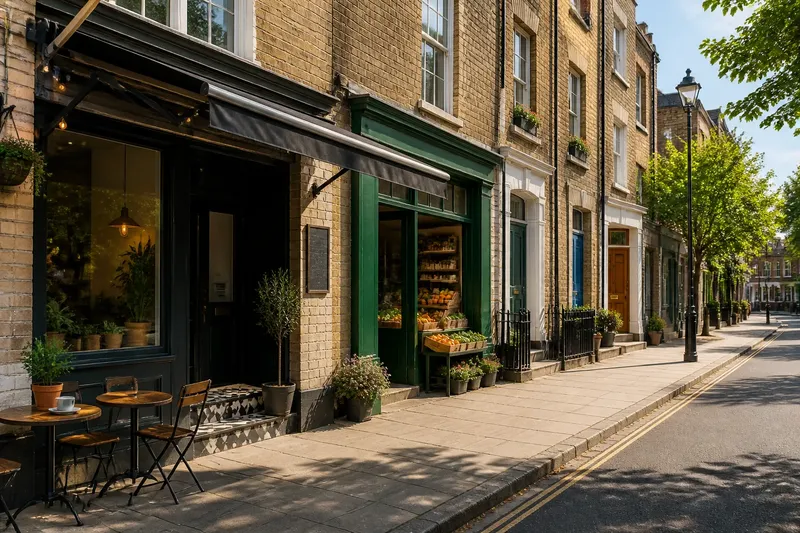
Choose a spot where you can see the whole frontage without blocking the pavement. Look at the shop from the angle at which you first encountered it, rather than moving straight up to the glass. A window’s effect depends on that approach: reflections, neighbouring signs, parked vehicles and the direction of foot traffic all influence what stands out.
Give your eyes a moment to settle. A single bright object, a block of colour or a sharply lit shelf may announce itself first. Then check whether the arrangement has a clear centre or whether your gaze drifts towards the door. In a more open shopfront, notice if you can identify the counter, a display table or a person at work without searching through reflections.
Keep the street context in view. A window facing a bus stop may need to catch a quick glance; one on a quieter side street can hold a closer arrangement. The neighbouring frontage matters, too. A restrained display beside a row of busy signs may read as calm, while the same arrangement on a plain stretch could seem easy to miss.
Read the window display
An arranged display makes a selection on the shop’s behalf. It might group a few objects around a seasonal colour, show a finished product beside its materials, or use a raised plinth to make one item the focal point. The useful question is not whether the styling looks polished, but what it helps you understand: the kind of goods sold, their scale, their use or the character of the shop.
Look for a visual route through the glass. A dominant object may draw your eye first; a repeated colour or line can lead it towards smaller items, a price card or a view of the entrance. If every object competes for attention, the arrangement may still be expressive, but it takes longer to read. A small, coherent group can communicate more quickly than a crowded window packed with unrelated stock.
Notice how the display relates to the interior. A low arrangement may leave the room visible above it; a dense backdrop can turn the glass into a picture frame and conceal what lies beyond. Neither is automatically a problem. Concealment can help a specialist shop present delicate or carefully chosen goods, while a partial view may reassure a newcomer who wants to see where to go.
Materials add another layer. Paper, fabric, timber, painted boards and simple risers create different textures and levels of formality. A handwritten card may make a display feel personal, but if it sits behind glare or among too many labels, its information is hard to use. Look at whether the lettering can be read from the pavement and whether it explains the objects rather than merely adding decoration.
Follow an open view
A clearer view into a shop shifts attention from a composed scene to a working interior. You may see shelves, a counter, a maker’s hands or the movement of customers. These details can answer questions a window display leaves open: Is this a place to browse? Is there someone available to help? Does the shop appear to specialise in one kind of item or several?
Trace the sightline from the pavement to the back of the room. A visible counter near the entrance makes the layout easy to grasp; a table placed further in can draw your eye deeper into the shop. If the view ends at a blank wall or a stack of boxes, that is still information: the interior may be compact, practical or organised around work rather than browsing.
Pay attention to the threshold. An open view need not mean an empty window. A narrow ledge, a few objects at the side or a clear gap in the centre can frame the room while preserving the sense that you can look in. The decision is often about where to leave visual space, not whether to remove every sign of display.
People are part of the view, but read their presence with care. A worker concentrating on a task suggests activity; a welcoming gesture can make the entrance feel easier to approach. A passer-by cannot know the whole atmosphere from a glance, and a busy interior may simply reflect the rhythm of that moment. Treat visible activity as a clue, not a complete account of the shop.
Compare what each invites
Now compare the two approaches by asking what kind of attention they request. A display asks you to stop and inspect a selected arrangement. An open view asks you to take in the interior and decide whether to step closer. The first can make merchandise vivid; the second can make the shop’s layout and activity easier to understand.
- Look for a clear subject. Can you name what the display is about, or what part of the interior the open view brings forward?
- Check the first glance. What catches your eye before you read a sign or move towards the door?
- Notice what is hidden. Does the arrangement obscure the room, or does the open view leave important products difficult to spot?
- Read the invitation. Does the frontage encourage browsing, a quick purchase, an appointment or simply a closer look?
- Consider the street around it. Does the shopfront stand out, sit comfortably among its neighbours or become hard to distinguish?
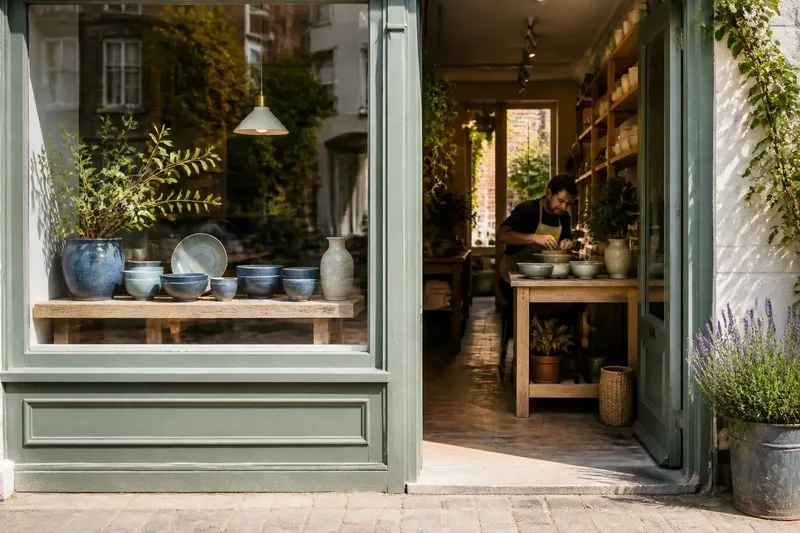
Say you are passing a small ceramics shop with a low table of blue bowls near the glass and an unobstructed view of a potter working further inside. The arrangement gives you a clear product to notice; the open sightline shows that making is part of the shop’s character. If the bowls were stacked high across the window, you might see the merchandise but lose the activity; if the table disappeared entirely, you might see the potter but miss what the shop sells. Each choice directs attention differently.
What should you look for?
What does a crowded window tell you?
It may signal abundant stock, a range of interests or a shop that favours visual energy. Look for repeated colours, grouped objects or one feature that helps the whole arrangement make sense; without a clear relationship, the window may simply be difficult to scan.
Does an open view mean the shop is more welcoming?
Not by itself. A clear sightline can make the entrance and interior easier to understand, but the doorway, lighting and visible activity also shape the impression.
How do reflections affect what you can read?
Reflections can overlay the display with trees, traffic or buildings, making small lettering and darker objects harder to see. Shift your position slightly and look for details that remain legible from more than one angle.
Which approach suits a small shopfront?
Either can work, depending on what the shop needs to show. A compact display can give a small frontage a strong focal point, while a selective open view can make a tight interior feel easier to understand.
Notice the final details
Before moving on, check the edges of the window and the route to the door. A display that draws the eye but leaves the entrance visually obscure may make the next action uncertain. Conversely, a clear doorway and visible counter can give an open view a practical focus, even when there is little merchandise in the glass.
Also notice what is not worth the effort: trying to infer a shop’s quality, service or prices from one glance. A window can suggest care and a view can reveal activity, but neither tells the whole story. Use what you can actually see—how attention is guided, what remains legible and how the entrance relates to the interior.
When you pass the next shopfront, take a second look at the space between the street and the room. A window display or open view is not just a choice about what to show; it is a choice about how a passer-by is invited to look, pause and decide whether to come in.