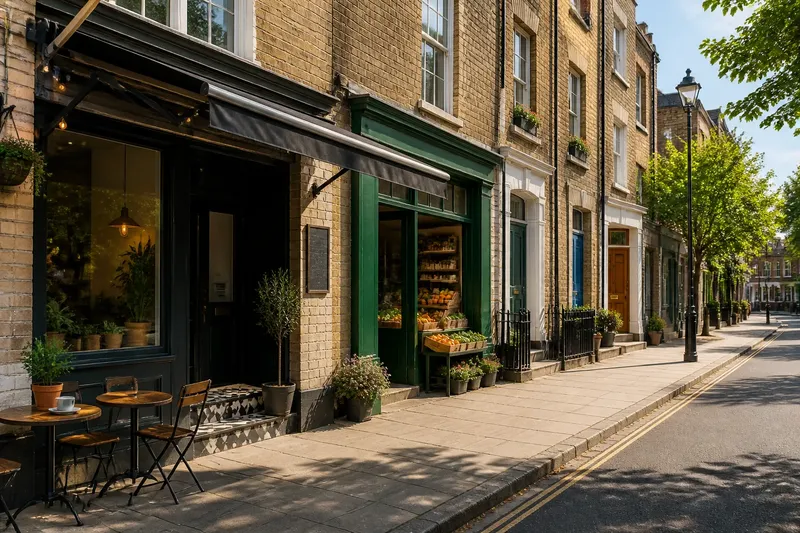
Finding Directions by Landmarks on Neighbourhood Streets
Finding directions by landmarks helps visitors follow neighbourhood routes with clearer turns, using distinctive, durable street features instead of extra signage.

Finding directions by landmarks works best when each visible feature tells a walker what to do next. “Turn right at the blue-tiled arch” gives a visitor a recognisable cue and a clear action; “go past the shops” leaves the turning point open to interpretation.
For a shopkeeper, residents’ group or local guide, the job is to note where people hesitate, choose a cue they can actually see, and write the turn in plain language. There is no need to catalogue every attractive doorway on the street.
Link cues to actions
A useful landmark stands out from its surroundings and sits close to the decision point. A library’s stone entrance, a painted wall or a bridge may be easier to identify than a business name that a newcomer has never heard. Describe what is visible, then say whether to turn, cross or continue.
Check the cue from the direction a walker will approach. A sign partly hidden behind a tree might be clear from one side of the street and invisible from the other. If several entrances lead into a square, name the feature that marks the correct one and explain what to do after reaching it.
Local familiarity can mislead. Residents may call a building “the old post office”, while visitors see only a closed shopfront. A distinctive tiled surround or a green door beside a post box is more useful if the detail can be picked out from the pavement.
Check the route
Walk one route that people genuinely ask about, such as the path from a bus stop to a community hall. At each point where someone might hesitate, assess the cue and decide whether to keep it, replace it or add a clearer action.
- Visible from the approach: If the landmark can be seen before the turn, keep it; if it is hidden, choose a cue visible from that approach or explain the turning point another way.
- Distinct from nearby features: If a newcomer can tell it apart from similar doors, trees or signs, use it; if not, name a more distinctive feature.
- Close to the decision: If the cue sits at the junction or entrance, pair it with the turn; if it is some distance away, add an unmistakable next landmark or choose a nearer one.
- Stable enough for the route: If the feature is a fixed entrance, bridge or public sculpture, it may suit lasting directions; if it is a market stall or chalkboard, use a durable alternative for a route intended to remain useful.
- Unambiguous action: If the wording makes clear which way to go, keep it; if “near the square” could mean several entrances, specify the correct entrance and direction.
- Path still accessible: If the pavement and crossing remain usable, retain the route; if construction or another obstruction changes the path, walk it again and write a safe alternative.
- Current landmark description: If the named feature still looks as described, leave the wording; if it has changed or disappeared, replace the cue and check the route again before sharing it.
Say you are writing directions from a bus stop to a neighbourhood hall. Your starting notes are: a row of shops, a square with several entrances, a blue-tiled arch at the correct entrance and glass doors at the hall. First, walk from the bus stop and confirm that the arch is visible before reaching the square. Next, note that “turn at the square” does not identify an entrance. Then pair the arch with the action and destination: “Continue past the row of shops; at the blue-tiled arch, turn right into the square and follow the path towards the hall’s glass doors.” The resulting decision is clear: keep the arch as the cue because it is visible at the correct entrance, and replace the vague reference to the square. These details are invented to illustrate the method, not a report of a real route.
Choose lasting details
Bridges, public sculptures and building entrances tend to stay put; chalkboards, seasonal planters and market stalls may move or vanish. A temporary cue can suit directions for a one-off event, but a lasting route needs a more dependable feature. If a change affects the walking path itself, revisit the route before distributing revised directions.
There is little value in printing an arrow at every corner when clearer wording will do. Extra signs can clutter a shopfront or compete with existing street information. Consider a physical sign only if people keep needing help at the same point and there is an appropriate place for one.
When should directions change?
What makes a landmark easy to recognise?
Choose a feature that stands apart by its shape, colour, material or position, and check that it is visible from the route’s approach. If it depends on knowing a shop’s name, describe a visible feature instead.
Can a shopfront guide visitors?
Yes, when its distinctive feature is visible from the pavement and likely to remain recognisable. Name the tiled entrance or painted panel rather than relying only on a business name that may change.
What if a landmark is temporary?
Use it for short-lived directions only, and name a durable nearby cue if one is clear. For a route meant to last, replace the temporary reference before sharing the directions.
When should a route be checked again?
Review it when a landmark changes, building work alters the walking path or someone reports confusion at the same point. Walk the route from the stated starting place so the revised directions match what visitors can see.
Keep directions current
When a business closes or a wall is repainted, replace the cue with another visible feature and check that the action still leads to the intended path. Keep a copy of the route where people are likely to need it, such as a community noticeboard or local website, and update it when the street changes.
Finding directions by landmarks does not require grand monuments. A well-placed doorway or a clear change in paving can make a neighbourhood easier to read, provided the cue is visible when a walker must choose. A quick route check after street works or a shopfront change can prevent an otherwise accurate direction from sending someone to the wrong turn.